
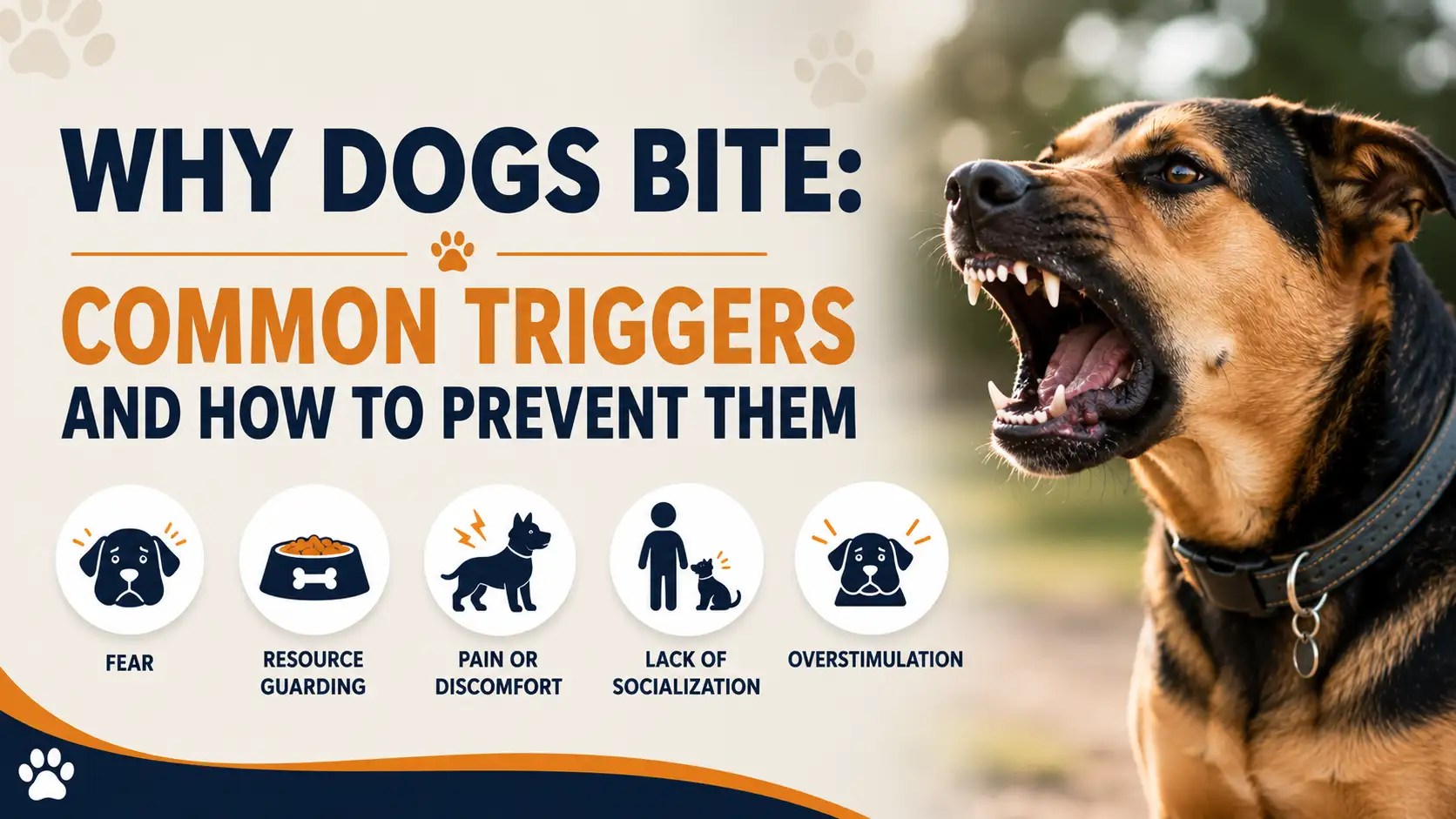
One of the most frequent behavior issues in veterinary practice is dog bites. Most bites are described as aggressive, but the situation is more complicated. In the majority of cases, fear, stress, miscommunication, or uncontrolled environmental factors are the cause of the incidents rather than the innate hostility. It is crucial that the veterinarians know the reasons why dogs bite, not just to treat and prevent, but also to advise pet owners using evidence-based information.
This article details the most common triggers behind dog biting behavior and offers practical, preventive strategies that veterinarians can use through client education and clinical intervention.
Knowing Dog Biting Behavior
There are hardly any situations when dogs bite without reason. From a behavioral standpoint, biting is a coping mechanism often the final escalation when earlier stress signals are ignored or misunderstood. Yawning, lip licking, avoidance, growling, and freezing are also some of the warning signs leading to a bite.
Veterinarians assist clients in identifying these initial signs and understanding that biting is typically a reaction to perceived danger, pain, or tension.
Common Reasons Dogs Bite
Fear and Anxiety
One of the most common causes of dog bites is fear-based aggression. When dogs are threatened, isolated, or confined, they can bite. This risk is highly elevated by poor socialization at an early stage of development.
Pain or Medical Discomfort
Underlying pain- orthopedic issues, dental issues, ear problems or internal illness reduces the tolerance of a dog. Even a well-socialized dog can bite when dealing with discomfort that is worsened by dealing. A medical assessment should always be instigated by a sudden change in behavior.
Resource Guarding
Protecting food, playthings, sleeping spots, or owners is a survival instinct that is problematic when not handled properly. Resource guarding can become a learned and reinforced behavior without early intervention.
Territorial and Protective Responses
Dogs can become very defensive when threatened by their territories or when their own family members are threatened. This usually happens at the doorsteps, when a delivery is being done or when strangers walk to the house.
Stress Triggers in Dogs
The risk of bites is magnified by chronic stress which comes as a result of noise, crowding, disrupted schedules or enrichment. Identifying stress triggers in dogs is important in order to change behavior in the long run.
Dog Bite Prevention: A Veterinary Idea
- Early Socialization and Controlled Exposure
Veterinary practicioners should emphasize the importance of structured socialization during puppyhood, while also advising caution against overwhelming or unsafe exposure.
- Pain Management and Medical Screening
Regular check-ups can help identify behavioral changes associated with pain at the initial stages. The treatment of discomfort can diminish aggression without involving behavioral interventions.
- Client Education on Canine Body Language
Educating owners on early warning signs is one of the best dog bite prevention strategies. It is easy to tell them to avoid cases where the dog is compelled to assault.
- Environmental and Behavioral Management
Low-technology changes, like predictable retreat areas, safe places to hide, enrichment, and preventing familiar triggers can significantly reduce bite incidents.
Because of the increasing need for these specialized behavioral assessments, many clinics with veterinary jobs hiring are now looking for candidates who prioritize “fear-free” handling techniques to minimize patient stress.
- Referral When Needed
Complex cases may require collaboration with veterinary behaviorists or certified trainers. In multidisciplinary practices, understanding referral pathways is just as important as initial assessment.
The Use of Veterinary Teams in Bite Prevention
Veterinarians and support staff are often on the front lines of bite-risk assessment. Clinics that emphasize on continuing education, behavior protocol and staff safety training are in a better position to handle such cases. Practices actively hiring veterinary professionals with behavioral knowledge can also improve both patient outcomes and workplace safety.
Availability of proper clinical equipment and safety handling equipment is also significant. Dependable veterinary surgical instruments and restraint tools are used in making tests less traumatizing and potentially safer to patients and staff.
Conclusion
Dog bites are complicated behavioral phenomena that are dependent on fear, pain, stress, and environment. By understanding the common reasons dogs bite and taking proactive steps to prevent it, veterinarians can minimize the danger, enhance patient well-being, and provide pet owners with practical and science-based advice.
FAQs
Why are dogs unpredictable biters?
A majority of the bites are painted by stress cues which are not noticeable. Dogs tend to bite when cautionary measures are not taken.
Are there any medical causes of sudden dog aggression?
Yes. A systemic illness, neurological problems, and pain can greatly diminish the tolerance of a dog as well as cause it to unexpectedly bite.
What is the highest cause of dog bites?
Among the major causes are fear and anxiety, particularly in ill-socialized or stressed dogs.
What can veterinarians do to avoid dog bites?
Early medical screening, client education, behavior assessment, and referrals when needed.
Do aggressive dogs necessarily pose a threat?
Not necessarily. Most of the dogs that are classified as aggressive respond to certain stimuli that can be handled through appropriate intervention and environmental management.


Gisele Suggest!
Upgrade Your Pup’s Gear with These Must-Haves! — Explore Now! (Aff.link)