
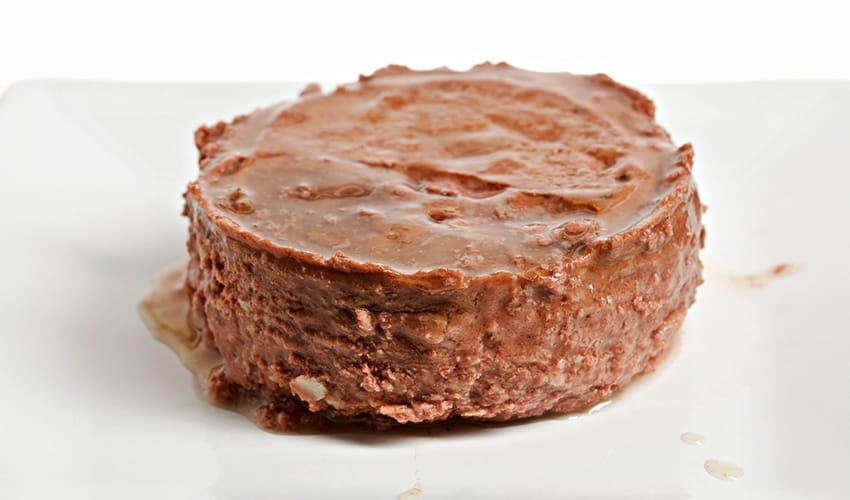
Trying to determine the best food for your dog can be stressful for doggie parents. Canned food (also known as wet food), kibble, gently air dried, raw, dehydrated, semi moist — so many choices. Each comes with its own benefits and drawbacks.
Any type of dog food can be good for a dog as long as it is high in protein, contains good quality ingredients, is low on fillers and preservatives, and meets the nutritional profiles set out by the Association of American Feed Control Officials. Animal proteins should always be in the top few ingredients in the ingredient list.
So, yes, canned food can absolutely be a healthy option for your adult dog or puppy. When selecting a wet food, look for the phrase “complete and balanced” on the label. This means the food can be eaten everyday and meets the nutrient profiles, or passed a AAFCO feeding trial.
“For a product to meet one of the AAFCO nutrient profiles, it must contain every nutrient listed in the profile at the recommended level,” according to the U.S. Food & Drug Administration.
Also make sure you buy a wet food that is best for your dog’s age. Puppies should be fed puppy specific food or one marked as being for all stages of growth. For puppies, you need a wet food that contains a minimum of 22.5 percent crude protein and 8.5 percent crude fat.
What, exactly, makes wet food so great for dogs?
It contains lots of moisture
Unlike dry or dehydrated food, canned food hasn’t had the moisture sucked out of it during processing. The meat in the can is moist, and typically extra water is added during the canning process. This makes canned food a great option for dogs who avoid their water bowl. If you’re worried your pup isn’t getting enough water, canned food provides a liquid boost.
Wet food can contain up to 85 percent moisture, while dry food often contains around 10 percent moisture. Most moisture is removed from dry food during the kibble manufacturing process.
Wet food may contain more protein than dry food
Wet food often contains more protein and fewer carbs than dry food. Even if it looks, at first glance, like canned food has less protein in it than dry food, you may be surprised to find out it often contains a higher percentage of protein.
It’s challenging to compare nutritional labels on a can of wet food and a package of dry kibble and figure out what has more protein. In order to determine which has more protein, you need to calculate dry matter for each product you want to compare.
“Dry matter basis is a representation of nutrients (i.e. protein, fat, and fiber) which ignores the moisture content of the food. In other words, it’s the amount of protein, fat, and fiber which would be reported if the product’s moisture were completely removed,” according to PawDiet, which offers a basic dry matter calculator.
You can also do the math yourself.
The Pet Food Institute has instructions on how to determine dry matter in foods.
- First, calculate the percentage of dry matter in each pet food by subtracting the percentage of moisture reported in the guaranteed analysis (GA) from 100 percent. For example, the GA for moisture in a can of food might be 70 percent, which equals 30 percent dry matter (100 percent minus 70 percent).
- Next, for each product, divide the reported nutrient level you are interested in comparing by that product’s dry matter percentage. Using the example above, if that same product GA reports 10 percent crude protein, then the product has a dry matter protein level of 33 percent (10 percent divided by 30 percent).

Canned food may contain fewer preservatives than dry food
If you are concerned about added preservatives in your dog food, canned food may be for you.
“Due to their air-tight packaging, canned dog foods contain no synthetic preservatives,” according to Dog Food Advisor. “So, fats and oils sealed inside don’t easily become rancid.”
Always read labels to know for sure what is in your canned food. It’s not impossible for there to be unwanted preservatives in a product and reading ingredient labels is the only way to know for sure.
“Wherase canned food is preserved by the process of canning, most kibble is preserved artificially,” according to Dogs Naturally Magazine. “(Ever contemplate how much preservative must be required to retard spoilage of food left out all day?)”
Canned food is “fresher” than kibble
“Kibble begins as a dry cooked meal whereas canned food is canned fresh,” says Dogs Naturally Magazine. “Kibble is exposed to more heat than canned (destroying nutrients).”
Canned dog food is still processed, but the meat and other ingredients are closer to their natural state than they are in kibble.
Canned dog food contains fewer carbs than dry food
Canned dog food is primarily made up of protein and fat and doesn’t need gluten, gums or wheat binders to hold it together. Binders and powdered starches don’t add much nutritional value to food, and many pet owners who are concerned about their dog’s carbohydrate intake like wet food for this reason.
Of course, check the labels to know for sure. Some wet foods do contain binders in order to make the food look more “chunky.”
Is wet food bad for my dog’s teeth?
This is a persistent rumour, in part because some dry foods claim to clean a dog’s teeth as they chew it. Some foods contain chemical ingredients that claim to break down plaque or prevent tartar buildup.
The best way to maintain good oral health for your dog is to avoid added sugars, chemical preservatives, and to brush your dog’s teeth with a vet recommended doggie toothpaste. You can also try dental chews or raw bones to maintain your dog’s oral health. Some vets and groomers offer teeth cleaning services.
Don’t rely on foods to keep your dog’s teeth white a sparkly. Instead, break out the dog’s toothbrush and get to work.
This Post was originally published by Laura from dogsnpawz.com. Click here to read the original.