
Pet parents care deeply about their pets. That’s why any sudden change in their furry friend’s behavior feels like an emergency.
However, not every symptom requires an immediate trip to the emergency clinic. Sometimes your pet just needs a quiet space to rest.
It is important, therefore, for pet owners to distinguish between emergency and non-emergency situations to treat them accordingly. This will save you from unnecessary stress and costly vet expenses.
This guide will tell you when to see a veterinarian immediately and when it will be safe to make a regular appointment with your vet.
What’s a Pet Emergency?
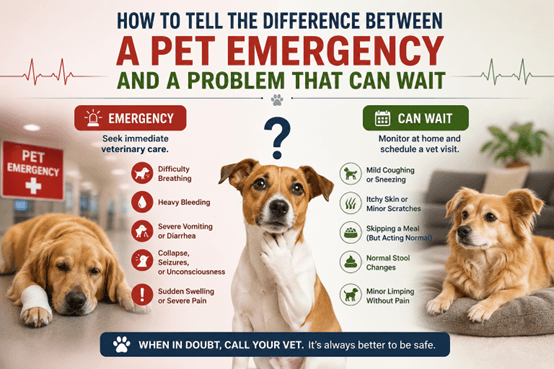
A pet emergency is a medical situation that requires urgent veterinary care. Pet emergencies are time-sensitive, and any delay can harm pets, increase their suffering, or even become life-threatening. Because every minute counts, early treatment can make a difference.
Therefore, you need to hurry and take the pet to the emergency veterinary services. You can always request an emergency vet visit if it is not possible to get your pet outdoors.
Signs of Pet Emergency That Require Urgent Animal Care
Traffic accidents and animal fights are obvious emergencies, but some health emergencies are less obvious. They may seem insignificant at first, but they must be treated by a vet immediately.
Here are some common pet emergencies that pet parents must be aware of:
Bleeding & Physical Trauma (A Big Red Flag)
- Unstoppable bleeding
- Open wounds caused by an accident or fall
- Broken bones or inability to support weight
Breathing Problems
- Labored breathing
- Breathing with open mouth
- Blue/purple-tinged gums or tongue
Ingesting Foreign Object
- Swallowing sharp objects such as needles
- Ingesting inanimate things like socks, toys, etc.
- Choking on swallowed object
Negative Neurological Response
- Seizures
- Sudden collapse
- Extreme disorientation
Ingesting Toxins / Chemicals
- Consuming chocolate, grapes, onions, garlic, or xylitol
- Drinking chemicals such as household cleaners
- Eating high-potency human medications
GI Cases
- Frequent vomiting or dry heaving
- Repeated episodes of diarrhea
- Bloody or black stool
- Swollen or hard belly
- Constipation
Reproductive Emergencies
- Prolonged labor or difficulty delivering puppies or kittens
Urinary Obstruction
- Inability to urinate
- Repeated straining
- Yowling while trying to urinate
- Blood in urine
Other Critical Signs
- Extreme lethargy
- Refusing food or water
- Excessive panting and drooling (heatstroke)
- Pale or white-colored gums
- Hypervocalization due to discomfort
Any of these signs should be treated as a medical emergency, and your pet should be taken to a veterinarian without delay.
How to Handle Pet Emergencies?
The minute you recognize an alarming situation, provide your pet first-aid to buy some time. If you are not trained for providing first-aid, head out to your nearest emergency animal hospital or clinic so treatment can begin as quickly as possible.
Try to stay calm. Your pet is counting on you for comfort and care. Keeping a clear head and getting them to an emergency veterinarian as quickly as possible gives them the best chance of receiving the treatment they need.
Important Note: No matter how overwhelming the emergency feels, remember that the professionals behind vet tech jobs dedicate their careers to caring for pets in moments like these. They know how to comfort frightened animals, ease their pain, and support them through treatment in ways that simply aren’t possible at home.
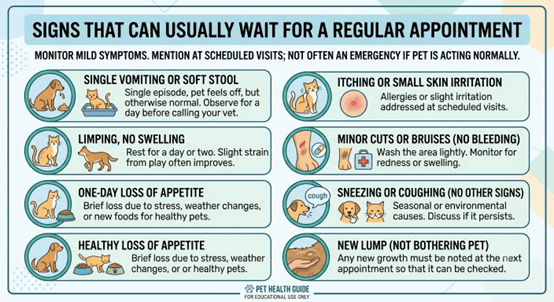
Signs That Can Usually Wait for a Regular Appointment
Sometimes, your pet feels off and shows mild symptoms of discomfort. These symptoms are worth monitoring and mentioning to your veterinarian, but they do not require an emergency visit to the hospital.
- One incident of vomiting or soft stool. A single episode, when your pet is otherwise normal, is usually a reaction to diet and can be observed over a day or so before you call your veterinarian.
- Your pet limps, but there is no swelling.
- Slight strain, following rough handling, will often improve with a day or two of rest.
- When a healthy, active pet has one day that he or she does not feel like eating as usual. Sometimes, when there is stress, changes in weather, or new foods, there can be a brief loss of appetite.
- Itching or a small patch of skin that is irritated. Most allergies and slight irritation are not an emergency but should be addressed at scheduled visits.
- Minor cuts or bruises that do not bleed. Wash the area very lightly and monitor it for signs of redness or swelling to indicate the need for further investigation.
- Sneezing or coughing, but no other signs or symptoms. This may be due to seasonal or environmental causes and should be discussed at a regular check-up if it persists.
- A new lump that doesn’t seem to be bothering your pet. Although most lumps are harmless, any new growth must be noted at the next appointment so that it can be checked.
Summary: The Baseline Rule for Pet Emergencies
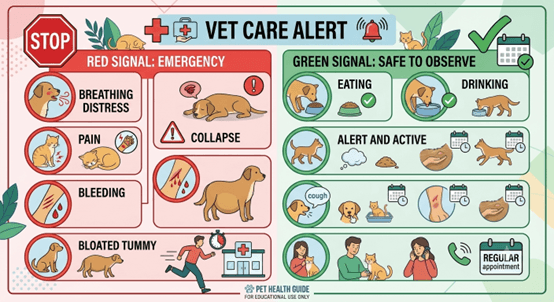
If your pet is unable to breathe normally, unable to stand, visibly in pain, bleeding, or showing a bloated tummy, this is an emergency. If a pet is eating, drinking, alert, and moving around normally with slight symptoms, it is generally safe to observe. You can mention the symptoms in your next vet visit.
Every day, professionals in the veterinary field care for pets whose conditions have become life-threatening in a matter of hours. Waiting at home and hoping your pet will improve can allow the problem to worsen. If something doesn’t feel right, seeking emergency veterinary care without delay gives your pet the attention and treatment they need.
As demand for after-hours and emergency pet care keeps growing, animal hospitals nationwide are expanding their teams regularly, so if you’re in the veterinary field and curious how it is growing where you live, it’s worth browsing veterinary jobs by state.
You know your pet better than anyone. Trust the small changes you notice, and seek veterinary care right away if you believe your pet is facing an emergency.
FAQs
What are the most common signs of a pet emergency?
Common signs include difficulty breathing, uncontrolled bleeding, seizures, poisoning, repeated vomiting or diarrhea, inability to urinate, and severe injuries. These symptoms should never be ignored.
Is one episode of vomiting always a pet emergency?
Not always. A single episode of vomiting in a pet that is otherwise alert, eating, and drinking may not need emergency care. Repeated vomiting or other serious symptoms should be treated as a pet emergency.
What should I do during a pet emergency?
Stay calm. Keep your pet as comfortable as possible, and contact your veterinarian or go to the nearest emergency animal hospital. You must also provide basic first aid while arranging immediate veterinary care.


Gisele Suggest!
Upgrade Your Pup’s Gear with These Must-Haves! — Explore Now! (Aff.link)