A recent study has demonstrated that specially trained cancer detection dogs can effectively identify bladder cancer in other dogs by detecting unique odours in urine samples.
The research, conducted by Medical Detection Dogs (MDD) in collaboration with Davies Veterinary Specialists, the University of Bristol, and the Royal Veterinary College, suggests this could provide a rapid, non-invasive diagnostic method for canine bladder cancer.
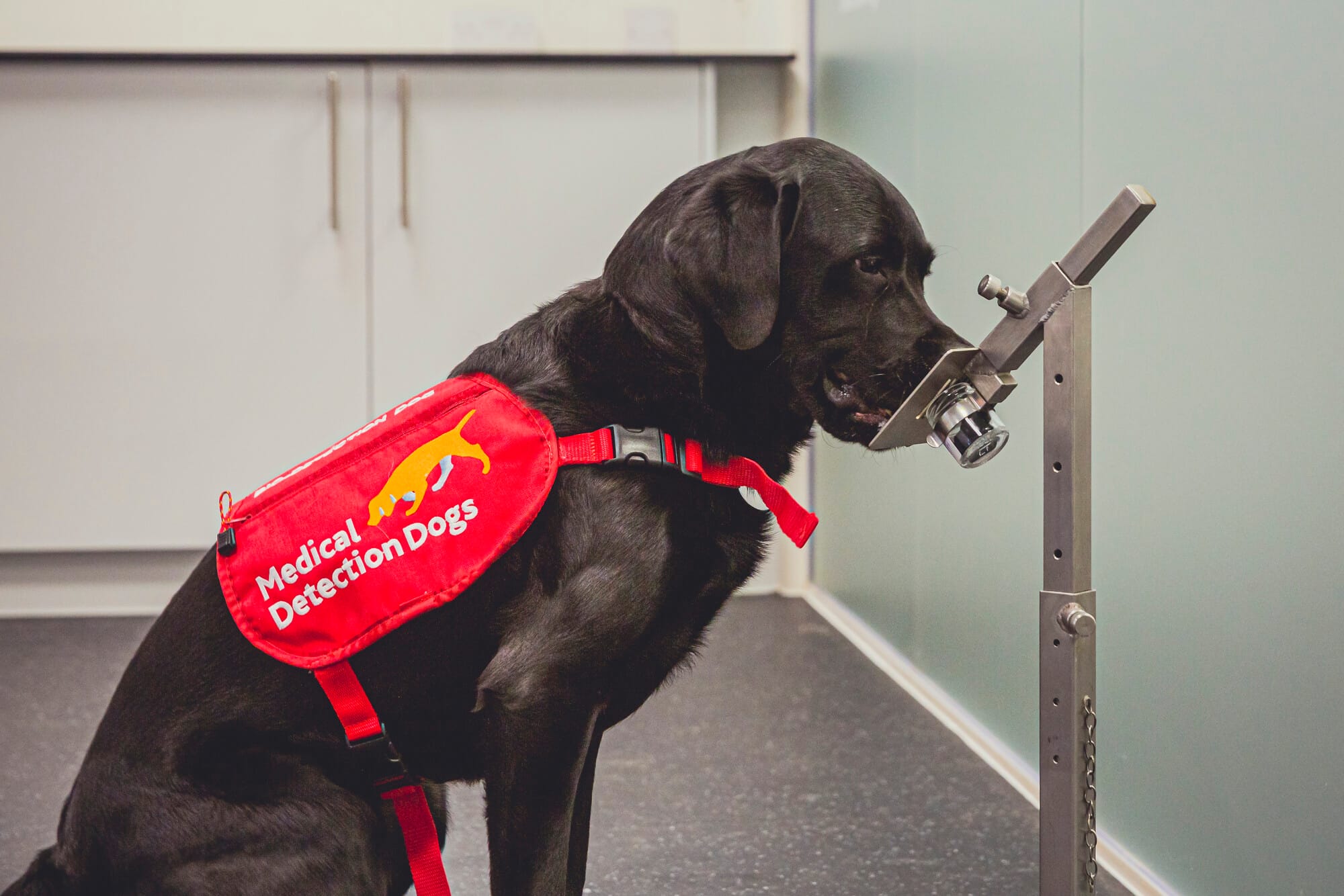
Three dogs – Kizzy, a chocolate Working Cocker Spaniel, Jobi, a black Cocker Spaniel, and Marlow, a black Labrador – were trained by MDD to detect urothelial carcinoma (UC) of the bladder. Previously trained to detect human cancers, these dogs learned to identify cancerous urine samples in dogs with up to 90% sensitivity and 95% specificity.
Bladder cancer, particularly UC, accounts for around 2% of all reported canine cancers and can be challenging to diagnose due to its similarities to other urinary conditions such as infections and bladder stones. Traditional diagnostic methods, such as biopsies, can be invasive, costly, and time-consuming, potentially delaying treatment.

During the study, urine samples from clinical patients at Davies Veterinary Specialists were used alongside samples from healthy dogs belonging to MDD staff and volunteers. The dogs were trained to sniff urine samples placed on metal stands in a training room and indicate positive samples through behaviours such as sitting, staring, or standing. They were rewarded for correctly identifying cancerous samples and for ignoring non-cancerous ones.
Claire Guest, CEO, Co-Founder and Chief Scientific Officer at Medical Detection Dogs, says, “We have proven many times that dogs can detect cancer in human samples so were confident that they would also be able to smell it in those from other canines.
“We are delighted that they were so successful at finding the odour of bladder cancer as it is a difficult disease to diagnose using traditional methods and unpleasant and intrusive for canine patients.
“When they do get diagnosed, the disease is often advanced so there is great potential value in a new, early, cheap, rapid and non-invasive diagnostic test which could lead to opportunities for earlier intervention than is possible at present. Dogs are way more than only man’s best friend.”

The findings, published in Veterinary and Comparative Oncology, suggest that cancer detection dogs could offer a practical alternative for diagnosing bladder cancer in dogs, potentially improving early detection and treatment outcomes. The research was funded by The Kennel Club Charitable Trust.
Isabelle Desmas-Bazelle, who spearheaded the study at Davies Veterinary Specialists and is now a lecturer in oncology and Co-Head of Oncology at the Royal Veterinary College, says, “The dogs involved with the study demonstrated a sensitivity superior to cytology of a free catch sample and similar to the BRAF test. It suggests cancer cells have a unique odour pattern, possibly via secretion of volatile organic chemicals.
“This exciting research could lead to the development of an electronic nose as an additional diagnostic test for UC.”
This Post was originally published by Dogs Today from dogstodaymagazine.co.uk. Click here to read the original.

Gisele Suggest!
Wag-Worthy Fun: Toys to Keep Your Pup Entertained! — Explore Now! (Aff.link)