
Rewarding your pup for listening to you, learning a new trick, or let’s face it — just being cute, is a good way to reinforce those wanted behaviors. Most dogs are highly food motivated and puppies are just learning about all the tasty food in the world.
Dog treats don’t need to come with a guaranteed analysis from the American Association of Feed Control Officials (the organization that sets the nutrient guidelines for dog food). This is because treats aren’t expected to be complete and balanced, and they aren’t meant for ongoing feeding. Treats are meant for rewarding specific behavior, or as an extra special goodie.
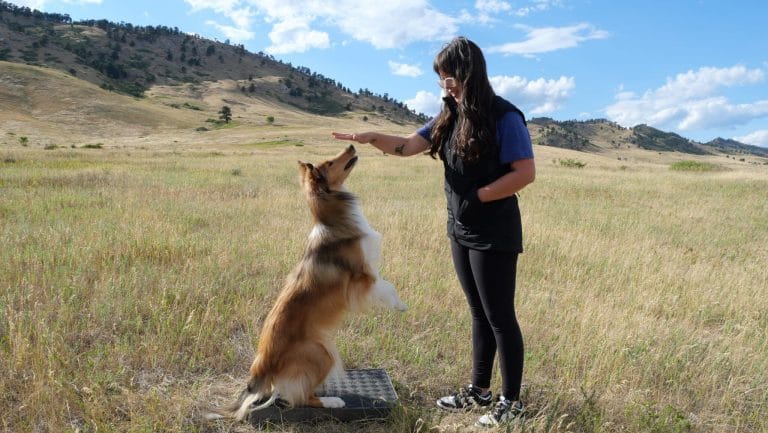
Some dog trainers even recommend associating specific treats with specific training. For example, the command “come” may have a different treat associated with it than the command “leave it.” Any behavior you’re particularly anxious about changing or having your pup learn should be associated with an extra yummy treat.
Trainers and dog owners often talk about high-value and low-value treats. This isn’t about how much the dog treat costs — it’s about how much your dog loves the treat and how hard they’re willing to work for it. High-value treats tend to be freeze-dried proteins, stinky treats, tiny pieces of chicken or peanut butter — things your dog doesn’t get all the time. Use these types of treats when you’re rewarding your dog for excellent behavior, exposing your dog to something new and scary, or behavior modification (like convincing a puppy not to lunge at other dogs).
Medium value treats are great for reinforcing things your puppy has already learned. You give the command, the pup does it, it gets a medium value treat. These treats should still be appealing enough to your dog that you can use them in distracting environments like a dog park.
Low-value treats can be doled out if your dog is only partially engaging with a command or can be used in a treat-dispensing toy or puzzle to keep your pup occupied.
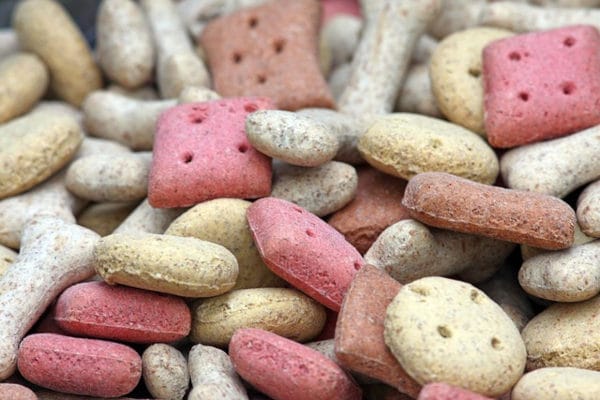
Above all, treats should be delicious. They should be appropriately sized: you don’t want your puppy to get more than five to 10 percent of total calories from treats during the day. Many training treats are roughly pea-sized. Treats should fit in your pocket or treat bag and be easy for you to grab in scenarios when you need to distract your puppy from unwanted behavior (like eating poop).
Treats shouldn’t be the exact same food you’re giving your puppy at mealtime. Puppies are smart — they’re not going to work for something you’ll give them for nothing later. Of course, that won’t apply to every dog. Some pups will work for any type of food.
Here are some options when it comes to treat time.
Single ingredient treats
The wonderful thing about single ingredient treats is you know exactly what your dog is eating. If you buy a single ingredient treat (dehydrated pork liver, for example) that’s all the product contains. If your puppy has a negative reaction to the treat (upset tummy, diarrhea) you know to avoid that ingredient in the future. It’s hard to figure out what bothered your pup’s tummy when a treat contains a lot of ingredients, coloring, or preservatives.
Some single ingredient treats puppies love are: dehydrated single source proteins (also great for owners because they are reasonably dry to the touch), dehydrated yams, slivers of cooked turkey, dried sardines, or anchovies.
Soft treats
Soft, or semi-moist treats, can be appealing to puppies while they’re teething because these treats are gentle on mouths. Plus, soft treats tend to be a bit stinky, and what dog doesn’t love stinky food? Puppies that get a whiff of their favorite soft treat can be distracted from unwanted or rebellious behavior. Fishy treats also come with a strong smell.
Small size treats
No matter the size of your dog, you want to make sure they’re not getting too many calories from all those extras. You certainly don’t want to ruin their appetite at dinner. Many commercially available treats are small so owners can worry less about how many treats their dog is getting. Some treats come with low-calorie counts per piece (one or two calories per treat) so you can keep track of how many calories your pup is getting.
If you buy large treats (dehydrated livers, for example, often come in large pieces) you can break them up into bite-size pieces for your puppy. It is harder to track calorie intake when breaking up larger treats.

Extra special treats
Puppies need a lot of training and sometimes their efforts need to be rewarded with extra special treats. You can provide small crumbs of cheese or cooked turkey during training blocks. Keep these delicious bits of goodness small and only use them as a reward during critical education times, like convincing your puppy to walk nicely on a leash or to come back when you call them. These treats shouldn’t be offered for being adorable or cuddly. Be purposeful and aware of how you’re using these treats so your puppy learns to associate good, wanted behavior with a bit of cheddar. Cheese is definitely a high-value puppy treat!
Try frozen (or fresh) fruit or veggies
If you’re worried about calorie intake or want to give your puppy more nutrients, fresh or frozen fruits and veggies can be an enticing reward. Pieces of carrot, mango, blueberries, watermelon, celery, broccoli, beansprouts — there are lots of options to try with your pup. By offering small pieces of veggies and fruit, you can also figure out what your dog likes to eat, should you decide to add fresh veggies to their regular meals. Crunchy veggies are often a big hit.
Fruit, because it contains higher amounts of sugar, should be fed in smaller amounts. Make sure your puppy doesn’t eat any pits because some fruit pits contain cyanide. Pits can also be a choking hazard or cause bowel obstructions if swallowed.
Slow eating treats
If you’re crate training a puppy or getting it used to car rides, you may need a slow eating treat. This can be a Kong filled with peanut butter or cream cheese, a dehydrated chew, a dried beef tendon, dried lamb ears, or a bully stick. There are many slow chewing treats on the market that are meant to take your dog a long time to eat.
These types of treats are great in scenarios when you’re trying to keep your dog preoccupied for a longer period or when you’re training it to be on its own.
For large breed puppies
Avoid treats with added calcium.
“Pups, unlike adult dogs, cannot adequately regulate how much dietary calcium they absorb from the intestinal tract,” according to VCA Hospitals. “Sometimes they absorb and retain too much calcium which can cause skeletal malformations. Excess calcium also causes deficiencies in other needed nutrients, like phosphorus.”
Large breed puppies are at particular risk and shouldn’t be given treats with added calcium
For small breed puppies
Watch the size of your treats! A small breed puppy doesn’t need a full-size dog cookie. That’s a lot added calories and depending on the size of your puppy, a meal-size portion. Keep your puppy treats and amounts relative to the size of your dog.
This Post was originally published by Laura from dogsnpawz.com. Click here to read the original.