
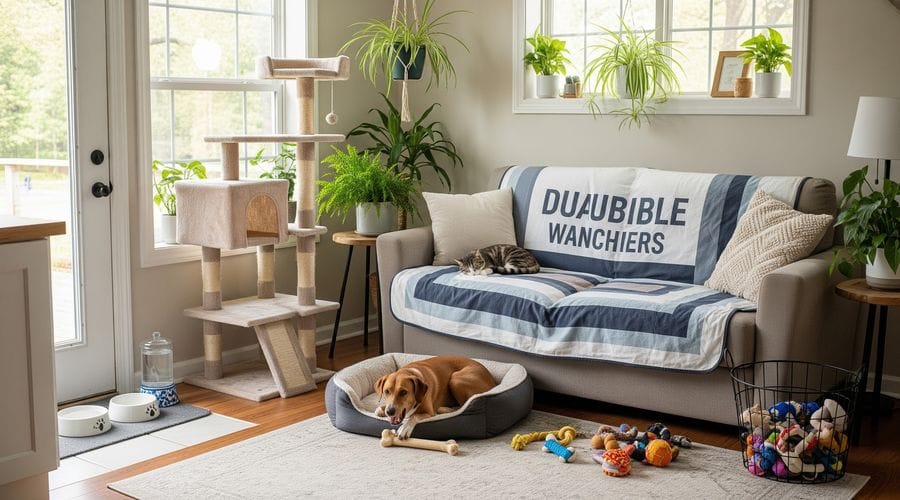
The provision of a dog-friendly home is both necessary and crucial to the well-being, comfort, and safety of the pets.
Regardless of the type of companion animal, whether dog, cat, or others, your house must accommodate their physical needs, mental stimulation and well-being.
Having a good living environment will avoid accidents, minimize pet stress, and make the lives of owners of pets easier.
This guide contains practical instructions on how to design a home to ensure the pets are safe, healthy, and comfortable.
Importance of a Pet-Friendly Home
Pets are dependent on the environment to be safe and stimulating. An expertly managed house can assist:
- Avoid injuries and accidents.
- Lessen apprehension and self-destructive action.
- Foster physical exercise and sleep.
- Guard against damage of home appliances.
- Use less energy on cleaning and maintenance.
Pets are less stressed and will be well behaved when they are safe in their environment.
1. Pet-Proof Your Living Space
Among the most significant processes of making a home a safe place is pet-proofing.
Remove Potential Hazards
Go about your house and name things that may hurt pets.
Common hazards include:
- Chewable electrical cords.
- Small items which can be ingested.
- Toxic household chemicals
- Sharp furniture edges
- Small packaging material or plastic bags.
Chemicals, cleaning agents and medications should be stored in closed cabinets where the pets cannot get.
Secure Trash and Food Items
Animals are curious creatures and they might look into garbage cans or food containers. Put safer lids in garbage cans and do not leave food unattended on counters.
2. Offer Spacious Sleeping Spots.
Each pet requires a home where he can rest.
Choose the Right Bed
Choose a pet bed that suits the size, age and sleeping habits of your pet.
- Small pet beds or cat beds.
- Orthopedic geriatric dog beds.
- High beds on warm conditions.
Beds should be placed in places where pets are not disturbed frequently.
Maintain Clean Bedding
Clean up pet bedding on a regular basis to minimize odors, allergens, and bacteria.
3. Establish Play and Activity Zones of Safety.
Pets require activities and brainwork to keep them fit.
Indoor Play Areas
Assign a little area in which pets can play safely.
Examples include:
- Climbing shelves or cat trees.
- Puzzle toys and treat dispensers.
- Durable chew toys for dogs
- Interactive toys to avoid being bored.
The play with toys can keep your pet entertained by rotating it every few days.
4. Guard Your Furniture and Floors.
Homes with pets must be pet friendly and at the same time secure the home contents.
Use Protective Covers
Furniture covers, washable blankets and scratch resistant material can be used to help prevent fur and scratches on sofas and chairs.
Select Pets Friendly Flooring.
Some floor materials are pet friendly, including:
- Tile
- Vinyl
- Laminate flooring
Such surfaces are less difficult to clean and are less prone to scratches.
5. Ensure that hygiene and cleanliness are maintained.
It pays to have a clean house not only to pets, but also to humans.
Regular Cleaning Routine
Protect a habit that comprises:
- Having pets that are well-vacuumed.
- Washing bedding and blankets of pets.
- Washing food and water bowls per day.
- Cleaning litter boxes or feeding areas.
Pet odors and allergens can also be reduced with the help of air purifiers.
6. Make sure of Proper Ventilation and Temperature.
Pets are fragile in terms of temperature and air quality.
Ensure Indoor Comfortable Temperatures.
Do not expose oneself to either extreme temperatures inside the house. Always make pets be in the presence of fresh water and in the shade in case of a rise in temperatures.
Improve Air Circulation
Proper air circulation will keep the air fresh and minimize the odor. Open windows where feasible or ventilation.
7. Establish Feeding and Rehydration Stations.
Designate a special place in the house where you eat.
Suggestions on improved feeding stations:
- Use non-slip bowls
- Keep the area clean and dry
- The supply of fresh water should be constant.
- Smaller dogs should use high bowls when necessary.
- Regular feeding habit aids pets to build good habits.
8. Provide Mental Stimulation
An interesting environment will keep pets active and avoid behavioral issues.
Some of the ways to enhance the environment of your pet are:
- Interactive toys
- Training sessions
- Window perches for cats
- Brief play activities during the day.
Cats require mental stimulation particularly when they remain longer at home.
9. Establish Clear Boundaries
Breaking pets and setting their limits within the home so that they understand how to obey instructions is a way of ensuring order and safety.
For example:
- Make some of the rooms unreachable.
- Use baby gates if necessary
- Do not teach pets to climb on furniture.
- Offer successors in scratching or chewing.
Habituation makes pets acquire acceptable behavior within a short time.
Conclusion
The process of making a home environment pet-friendly has to be carefully considered, safe, and regularly taken care of.
You can make a pet-safe, comfortable place, make pets exercise and play, and keep the environment clean to make them feel safe and happy at home.
An environmentally right design of pets is beneficial to both the pets and their owners to alleviate stress, as well as everyday living.
Although most families are fond of dogs and cats, the aquatic pets are also popular with some individuals and colorful species like peacock fish may be an interesting element in a well-decorated domestic setting.


Gisele Suggest!
Wag-Worthy Fun: Toys to Keep Your Pup Entertained! — Explore Now! (Aff.link)
